How to Plan a Golf Trip to Ireland
14 Important Decisions for Your Journey

If you're considering a golf trip to Ireland, you're not alone. The Emerald Isle is home to some of the world's most iconic links courses, as well as stunning landscapes, warm hospitality, and rich cultural traditions. All of which draws an ever-growing number of golfers from around the globe to its storied fairways.
But planning a golf trip of this caliber isn’t as simple as picking a few courses and booking a flight. The most successful journeys come down to a series of key decisions. Getting them right can make all the difference.
Whether it’s your first time across the pond or your fifth, this guide walks you through the 12 most important decisions to make when planning a golf trip to Ireland, built upon our decades of experience serving the members of over 1,700 private clubs.
Visit our Ireland golf trips page to learn how H&B helps private club members plan exceptional experiences to the Emerald Isle.
14 Decisions That Shape Every Ireland Golf Trip
-
1. Type of Trip
Couples, buddies, or family. Each requires a different approach to the itinerary and the pace of the journey.
-
2. The Invite List
The decision most likely to make or break your trip. Build a cohesive group with similar goals for the trip.
-
3. Your Budget
Get alignment early. It influences every decision that follows, from marquee courses to where you lay your head.
-
4. DIY or Golf Travel Company
40 to 50 reservations. The question is who makes them and who has the relationships to make them count.
-
5. Custom or Stock Itinerary
Pre-packaged works for some. For private club members accustomed to a certain standard, custom is table stakes.
-
6. When to Go
May through September is peak. April and October offer excellent value. June and July, long daylight.
-
7. Where to Go
Pick a region or two and leave the rest for next time. The Southwest requires a week on its own.
-
8. Where You'll Play
Anchor around one or two marquee courses and build outward. In Ireland, you'd need a month to play them all.
-
9. How Much Golf
Most groups play 5 to 6 rounds in a week. Leave room for rest, sightseeing, and long evenings at the pub.
-
10. How to Get Around
A private driver-host is as essential to the journey as the rounds themselves. Irish roads demand one.
-
11. Where You'll Stay
Landmark properties, boutique hotels, or country lodges. In Ireland, expect to move at least once.
-
12. The Good Life Off the Course
The pubs, the coastline, the welcome. These moments make it more than a golf trip. Give them real space in the plan.
-
13. What to Pack
Pack twice the money and half the clothes. Irish weather demands layers and quality rain gear.
-
14. Where to Next
Whether it's your first or tenth trip, this question is likely to come up before you even depart. For some courses, it has to.
1. Type of Trip
Before you think about destinations or tee times, define what kind of experience you’re planning. A couples’ trip, a buddies’ getaway, or a family golf vacation each requires a different approach.
A couples golf trip might include fewer rounds, refined accommodations, and time for cultural experiences. A buddies’ trip could focus on top-tier golf from sunrise to sunset. For a family golf trip, you may want an itinerary that keeps both golfers and tourists engaged.
At H&B, we design every trip around the group’s dynamic and individual preferences. Whether you're traveling with lifelong friends, your spouse, or three generations, we shape the itinerary to match the experience you're after.
2. The Invite List
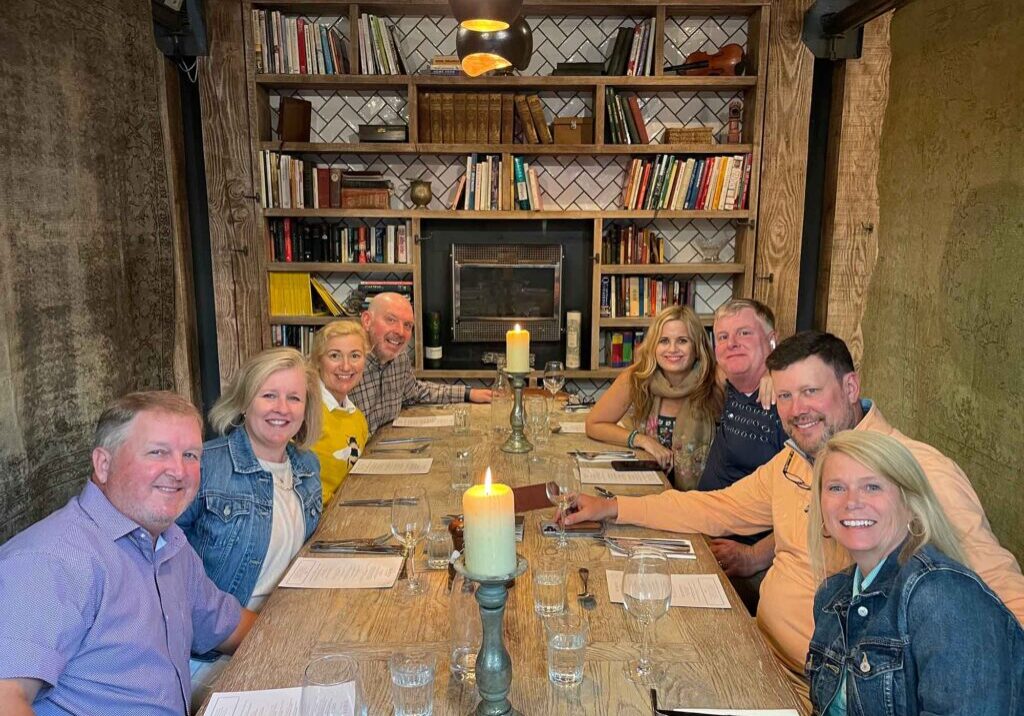
Choosing your travel companions is just as important as choosing your courses. The best golf trips are built on shared expectations, good chemistry, and a group that travels well together.
Think beyond playing ability. Are they early risers or late sleepers? Adventurous or traditional? Focused on golf or equally interested in enjoying the Good Life?
From a logistical standpoint, consider building your group in multiples of four. Many of Ireland’s top courses book tee times as fourballs only, and even numbers also help with rooming arrangements. Uneven groups can work, of course, but they may require added flexibility and planning.
If you’re still unsure who to include, we’ve created a guide to help you make the right decisions for a smooth, memorable journey: Who to Invite on Your Golf Trip Across the Pond.
3. Your Budget
It’s important to have an open conversation about budget early in the planning process. Aligning budget considerations within your group ensures a smooth experience both before and during the trip.
Since every H&B Expedition is fully customized, there’s flexibility in how much you invest. Your budget will be shaped by choices such as the regions you explore, the courses you prioritize, and the accommodations you select.
Some groups prefer to focus on Ireland’s most storied links and stay in landmark hotels. Others choose to mix Ireland’s marquee courses with a few that are less publicized but every bit as rewarding.
Whatever your preferences, we’ll help you design a journey that aligns with your goals, standards, and expectations. The following guide will help you better understand the key decisions that will drive your total price: How Much Does an Ireland Golf Trip Cost?
"When we started putting this trip together almost 2 years ago, having H&B as a partner in the planning process was the best decision we made. Your experience and knowledge of what elevates a good trip to a GREAT trip came through every day of our journey. One of the guys summed up the trip as we were walking down a fairway at Adare Manor on our first day in Ireland by saying, "My soul is smiling." That feeling only grew deeper with each passing day."
Bill Graves, Kirkbrae Country Club
4. DIY vs Enlisting an Expert
Planning a golf trip to Ireland is more complex than most expect. On average, it requires 40 to 50 separate reservations, from tee times and hotels to dining, transportation, and everything in between.
These days, there is no shortage of online resources or AI tools ready to assist the do-it-yourself planner. They can be helpful for inspiration. But when it comes to planning a golf trip to Ireland using AI, as the guide explains, even ChatGPT knows the difference.
You’ll need to coordinate with multiple golf clubs, many of which have limited availability, especially for visitor tee times. Add in accommodations that book out a year in advance, driver-host schedules, group preferences, and the occasional last-minute change, and it becomes clear this isn’t a trip you want to manage alone.
The question is: do you book it yourself, or partner with a golf travel company?
At Haversham & Baker, our planning team is composed entirely of current and former PGA Professionals. We speak the language of golf and understand the standards of private club travel. From tee times to dinners, every detail of your custom Ireland golf trip is handled with the same precision you’d expect at your club’s Member-Guest or Club Championship.
5. Stock vs Custom Itinerary
When evaluating golf travel companies, one of the most important questions to ask is: Will your itinerary be custom-tailored or pulled from a template?
Many tour operators offer “packages” that look appealing at first glance, but are actually pre-built itineraries with limited flexibility. These often prioritize attractive price points and what’s easy to arrange rather than what’s best for your group.
For private club members accustomed to a certain standard of experience, custom is table stakes. Your group has specific expectations around pace, quality, and the details that separate a good trip from a great one.
A stock itinerary might get you to Ballybunion and Old Head, but it won’t account for the rest day your group wants in Killarney, the distillery visit two of your guys have been talking about for months, or your group's vision for the flow of the trip. A truly custom approach treats each of those preferences as part of the design, not as add-ons.
When you travel with H&B, your Ireland golf trip is 100% custom-designed. We begin by learning about your group: the mix of golfers and tourists, your pace preferences, preferred courses, and travel history. Then we create a tailor-made itinerary that reflects your goals, not ours. No templates. No shortcuts.
For a closer look at why this distinction matters so much for the private club community, here’s why private club members choose Haversham & Baker.
"There is no question that I will use H&B on my next golf trip. You guys were amazing and made everything so easy. It felt like all that I needed to do was just get myself on the plane and show up to have the time of my life."
Michael LeBlanc – Cape Cod National Golf Club
Download Your Ultimate Guide to The Emerald Isle
The Complete Guide to
Ireland Golf Travel
What's covered in this free 40+ page guide:
- The best regions for golf in Ireland.
- Tips for making the most of your trip.
- Where to enjoy the Good Life between rounds.
- Lesser known courses you should play.
Plus links to over 50 additional guides and resources.
By downloading up you agree to receive marketing communications from Haversham & Baker and have read our privacy policy.
6. When You Go
Ireland’s golf season runs from late April through early October, with May to September offering the most favorable conditions: firm fairways, long daylight hours, and the best chances of sunshine.
June and July are the sweet spot for most groups. Daylight stretches past 10 PM in parts of Ireland, which makes for wonderfully long days both on and off the course.
April and October sit in the shoulder season. Conditions can be more variable, but the trade-offs are real: quieter courses, easier availability, and a lower overall cost. Ireland in the shoulder months often delivers the kind of authentic experience that peak-season crowds can sometimes dilute. And in recent years, they've produced some of the best weather of the season.
Beyond the weather, there are event-related considerations worth noting. The 2027 Ryder Cup at Adare Manor will reshape Southwest Ireland availability for much of that year. The 2026 Walker Cup at Lahinch will have a similar, more localized effect.
Ireland’s premier courses (Royal County Down, Royal Portrush, Old Head, to name a few) often book up 12 to 18 months in advance. Additional courses, hotel availability, and driver-host schedules follow shortly thereafter. Your personal calendar and group preferences will dictate the window, but the earlier you begin the process, the wider your options.
For a deeper look at seasonal timing, this guide covers the best time of year for an Ireland golf trip.
7. Where You Go
Ireland is home to so many world-class links courses, no single trip can cover them all. The key is to resist the temptation to pack in every big name and instead focus on one or two distinct regions. Leave the others for your next Expedition.
Ireland’s golf clusters in four main regions, each with its own character:
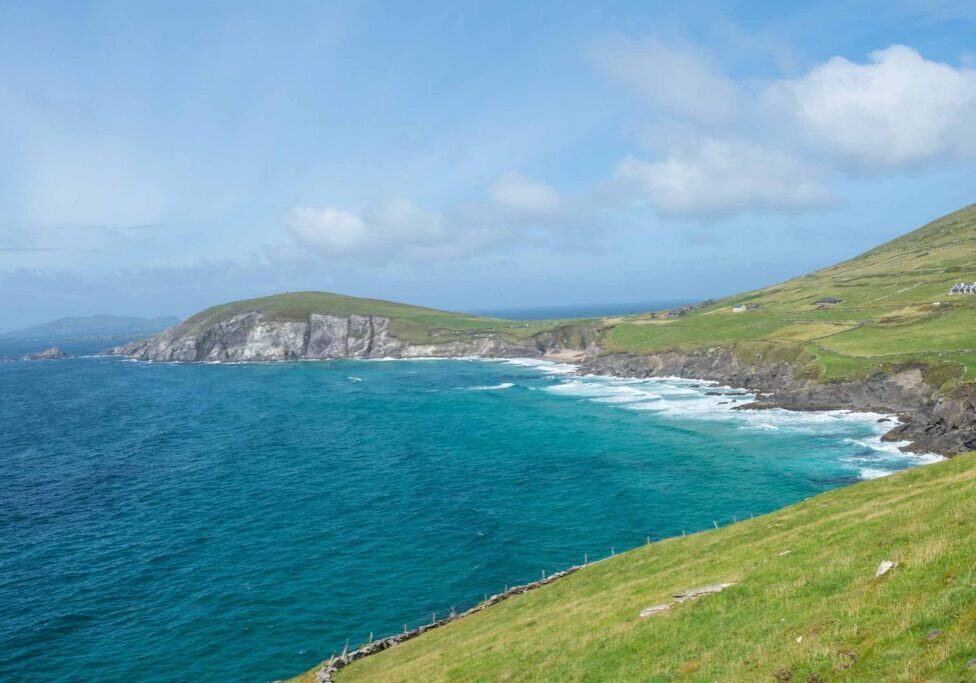
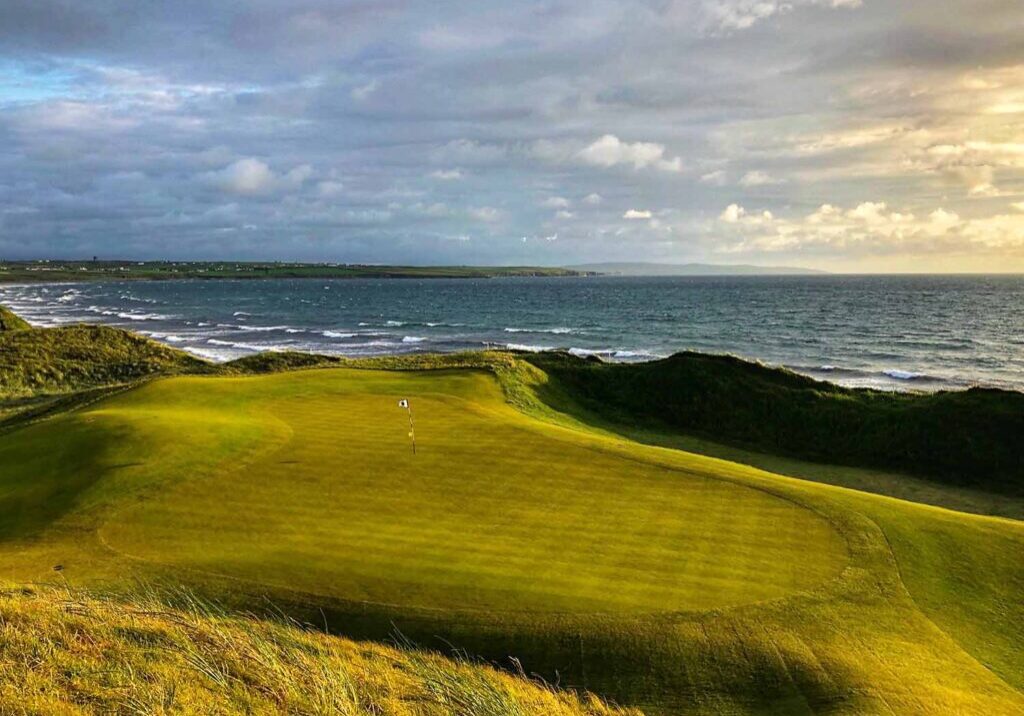
Southwest Ireland (Ballybunion, Lahinch, Tralee, Waterville, Old Head, Doonbeg, Adare Manor). The stretch of coastline that put Irish golf on the world map. Dramatic scenery, concentrated golf, and the future home of the 2027 Ryder Cup at Adare Manor. This region typically requires the most nights to do properly, given the distances between courses.
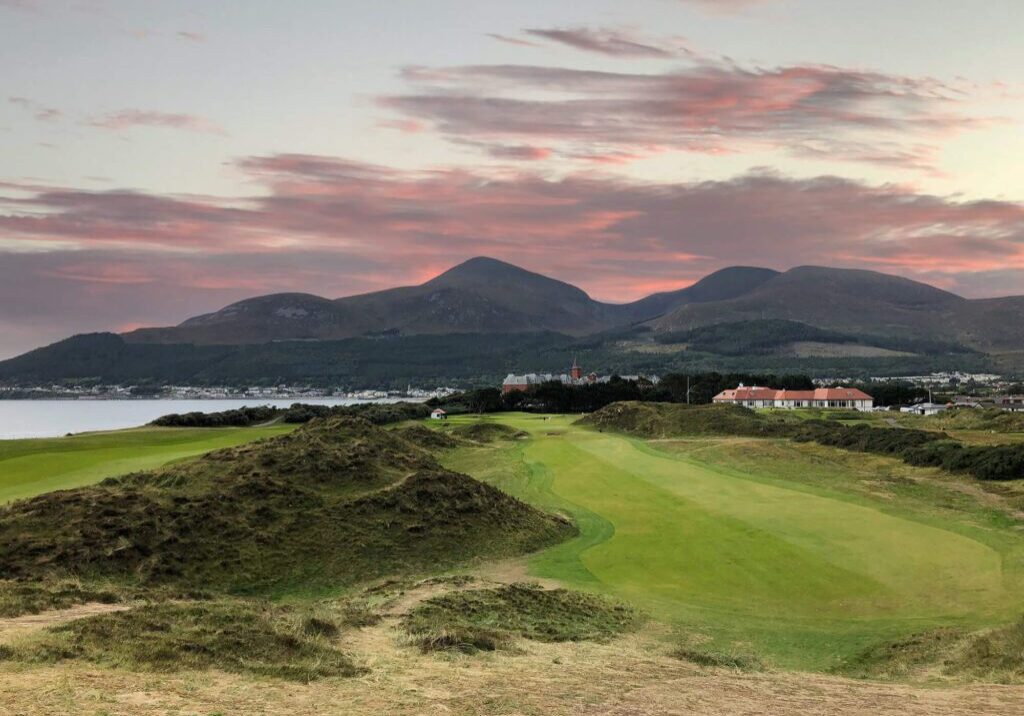
Northern Ireland (Royal County Down, Royal Portrush, Portstewart, Ardglass, Castlerock). Home to two of the top-ranked courses in the world. The most sought-after region for Ireland golf trips and the one that requires the earliest planning. Compact enough that a single base works for most of the golf.
Northwest Ireland (Rosapenna, St. Patrick’s Links, Portsalon, Carne, Enniscrone). Still a bit off the beaten path, which is part of the magic. Dramatic, remote, and increasingly popular since St. Patrick’s Links entered the World Top 100. The last remaining region in Ireland where availability is relatively accessible.
Dublin & the East Coast (Portmarnock, The Island, County Louth, Royal Dublin, The European Club). Easy access from the airport and a natural pairing with city time. Great for shorter trips or as a bookend to a Northern Ireland itinerary.
For a 7-night trip, Dublin can easily pair with Northern Ireland. Southwest Ireland, on the other hand, will usually require at least a week all on its own to do it right.
We’ve covered each region in depth in our guide to where to play golf in Ireland.
"I have traveled to 75 countries in my life. I have golfed many of the top 100 golf courses of the world. I just returned from a Haversham & Baker trip to Ireland. It was my number one favorite trip of my life. They arranged a first class trip including the most elegant hotels, top courses and delicious eating establishments. I’m truly impressed with their guidance, kindness, preparation and the price we paid was fair and commensurate with what we enjoyed."
Judge Jonathan Colby – July 2024
8. Where You Play
Once you’ve selected your regions, the next decision is just as crucial: which courses will earn a spot on your itinerary?
Ireland boasts a who’s-who of world-renowned links:
- Royal County Down – Ranked #1 in the world by many
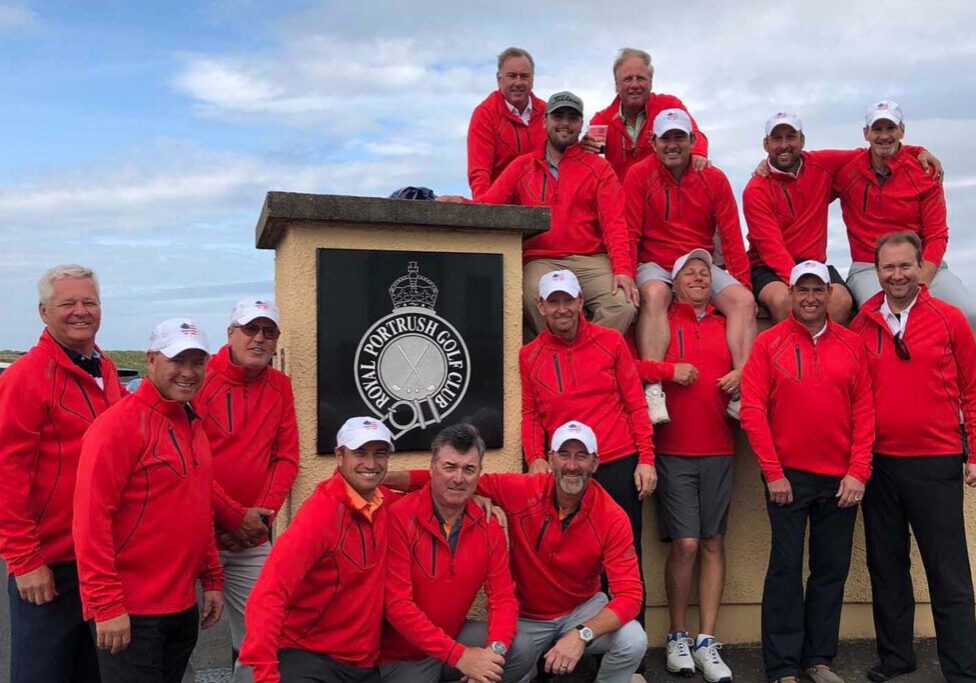
- Royal Portrush – Host of the 2019 and 2025 Open Championship
- Lahinch – A quirky, historic masterpiece
- Old Head – Ireland’s most scenic course, perched high above the Atlantic
- St. Patrick's Links – Dramatic newcomer to the World Top 100
But beyond the headliners, there are standout courses like Dooks, Enniscrone, The Island, and Ardglass, which often become our travelers’ favorites.
With limited time and tee sheets that fill quickly, it’s essential to prioritize based on your group’s preferences and your ability to plan in advance.
9. How Much Golf
Some groups want to maximize every moment on the course. Others prefer to pair world-class golf with sightseeing, pub culture, or simply some well-earned downtime.
For context, most groups on a 7-night trip play 5 to 6 rounds. That leaves room for a rest day, some sightseeing, and the kind of unplanned moments that become their own memories. Groups who want to push it can fit in 36-hole days at certain pairings, but those days are more demanding than they sound, especially with the wind off the Atlantic.
This is particularly important in Southwest Ireland, where the temptation is to squeeze all of the great courses of the region into a single week. It’s a lot of golf and a lot of driving. Sometimes, something has to give. Choosing quality over quantity here almost always leads to a better trip.
The first key is to be honest with yourself about how much golf the body can physically handle. Most travelers will play more golf in a weeklong trip than they might in 2 to 3 months back home. Planning one fewer round than you think you need is almost always the right call.
Whether it’s six rounds in four days or the reverse, H&B builds an itinerary that reflects your pace and ensures no one returns home needing a vacation from their vacation.
10. Who is Driving
Next to your invite list, few decisions will impact your group’s experience more than how you’ll get around Ireland.
While a self-drive golf trip may seem adventurous, it often introduces more stress than spontaneity. Navigating narrow rural roads on the left side, coordinating tee time arrivals, and managing group logistics can quickly take the joy out of the journey.
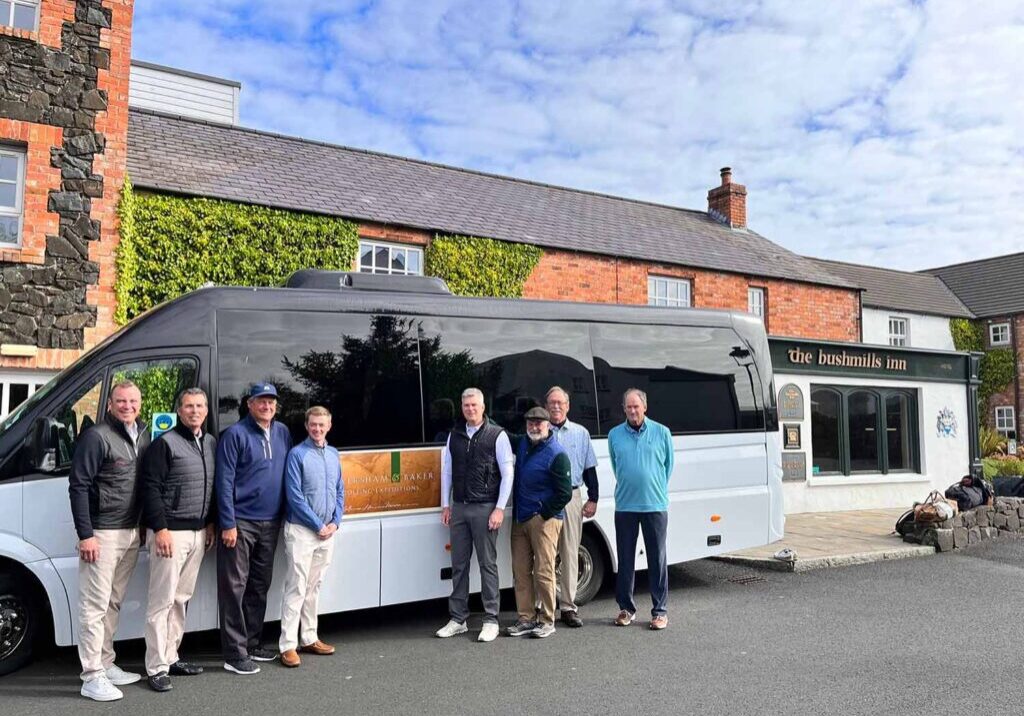
That’s why the vast majority of H&B Expeditions opt for a dedicated driver-host. A seasoned professional who not only handles transportation in comfort and style but also acts as a concierge, storyteller, and local expert.
They're as essential to a memorable journey as the rounds themselves, and they usually become like another member of your group.
For more insight, this guide covers the benefits of hiring a Driver-Host for your golf trip.
"Definitely recommend using a driver for the trip. Made for less stress and much better overall experience of Ireland. Enjoy every minute!"
Terry O'Toole - Coldstream Country Club
11. Where to Stay
Your accommodation sets the tone for the entire trip. And in Ireland, the range of options runs from five-star landmark properties to charming country lodges to vibrant city hotels, each offering something distinct.
The main decisions come down to style, proximity, and how often you're willing to move. In Northern Ireland, if your group desires some of the city life, a single base in Belfast can work for most of the golf. In Southwest Ireland, the story is different. The distances between courses typically require two or three different stops over the course of a week. That's not a drawback if it's planned well. Each new base brings a different town, a different coastline, and a different evening to explore.
Some groups want the landmark experience. Others prefer a boutique property with character and a strong restaurant. Still others opt for a self-catering lodge, which works particularly well for larger groups who want a shared home base.
More than anything, the right accommodation matches your group and your style. In Ireland, the drive between your hotel and the first tee is often longer than what you'd experience in Scotland. That's simply the nature of the geography, particularly in the Southwest.
Rather than fighting it, the best itineraries lean into it. Your driver-host turns those commutes into part of the experience, and the right accommodation ensures that where you end each day feels like a reward, not just a place to sleep.
12. What to Pack
When you get to this point in your planning, it’s important to remember the most common advice from H&B travelers: Pack less.
While Irish weather is famously unpredictable, modern golf apparel makes it easy to be prepared without overpacking. In addition to our golf trip packing guide, here are some key items we recommend:
- Quality waterproof rain gear
- Two pairs of golf shoes
- Layered clothing (light base layers, half-zips, vests)
- Apple AirTag (in case your airline sends the bag astray)
There’s an old adage when it comes to travel: Pack twice the money and half the clothes. Golf trips to Ireland aren’t much different.
13. The Good Life Off the Course
What separates a great golf trip from an unforgettable one is what happens between the rounds.
Ireland is so much more than its golf courses. The same country that gave us links golf along the Wild Atlantic Way also gave us centuries-old pubs where the music starts without announcement, coastal towns that feel untouched by time, world-class whiskey, and a warmth of hospitality that’s impossible to replicate anywhere else.
This is what we call The Good Life. And it deserves just as much thought in the planning process as your tee times.
A few questions worth discussing with your group before the itinerary is set: Does anyone want to visit a distillery? Is there interest in a rest day built around sightseeing rather than golf? Are there tourists in the group who need their own experience? Do you want your evenings planned, or do you prefer to wander?
The answers will shape everything from your accommodation choices to your daily schedule to how your driver-host plans the routes between courses. Some of the best Good Life moments are the unplanned ones. But building space for them into the itinerary is very much a deliberate decision.
To help get you started, we've compiled this guide to some of our favorite Good Life spots in Ireland.
14. Where to Next
For most H&B travelers, this question begins to form before they’ve even boarded the plane home.
Whether Ireland is your first foray into overseas golf or your tenth, it rarely ends with just one trip. Maybe next time you’ll explore Scotland, the birthplace of the game. Or return to Ireland to visit regions you missed or courses that left you longing for another loop.
At Haversham & Baker, we’re in it for the long game. Not just to plan a great trip, but to become your lifelong partner in golf travel. For the members of over 1,700 private clubs, we’ve become exactly that.
Frequently Asked Questions
Ready to Begin Planning Your Ireland Golf Trip?
Additional Reading













Visit the Yardage Book for More Golf Travel Resources
Discover More of Golf at its Finest with H&B