Scotland's North Coast 500: A Golfer's Guide
What to Expect on the NC500 and Where to Play Along the Way

Scotland has been very good to me. I've played the big-name links, explored every notable region for golf, and eaten my weight in fish & chips. But until recently, the top of my Scottish "bucket list" remained unscratched: the North Coast 500.
Every time I found myself in The Highlands, there was a reason not to do it. A tee time, meeting, or other work-related obligation pulling me south. The NC500 requires you to commit, and commitment is hard when Scotland keeps offering you other things to do.
This time, I ran out of excuses. I blocked the calendar, picked up a rental car (an MG SUV that I nicknamed Marjorie after the Taylor Swift song), and pointed it north.
I should also confess something upfront:
I did almost no research. In my head, this was going to be a coastal drive. Think Pacific Coast Highway with sheep. I was wrong about almost everything. And that turned out to be half the fun.
What followed was five of the most exhilarating, terrifying, beautiful, and genuinely unpredictable days of travel I've ever experienced. I ate some of the best and unexpectedly great food of my life. I white-knuckled a single-track mountain pass through sleet and snow with a sheer gorge opening up beneath me. I got caught in a hailstorm on a fairway and had to shelter underneath my trolley. And I returned Marjorie without a scratch, which I consider the single greatest achievement of my travel career.
If you've been thinking about doing the NC500, this is everything I wish someone had told me before I went.
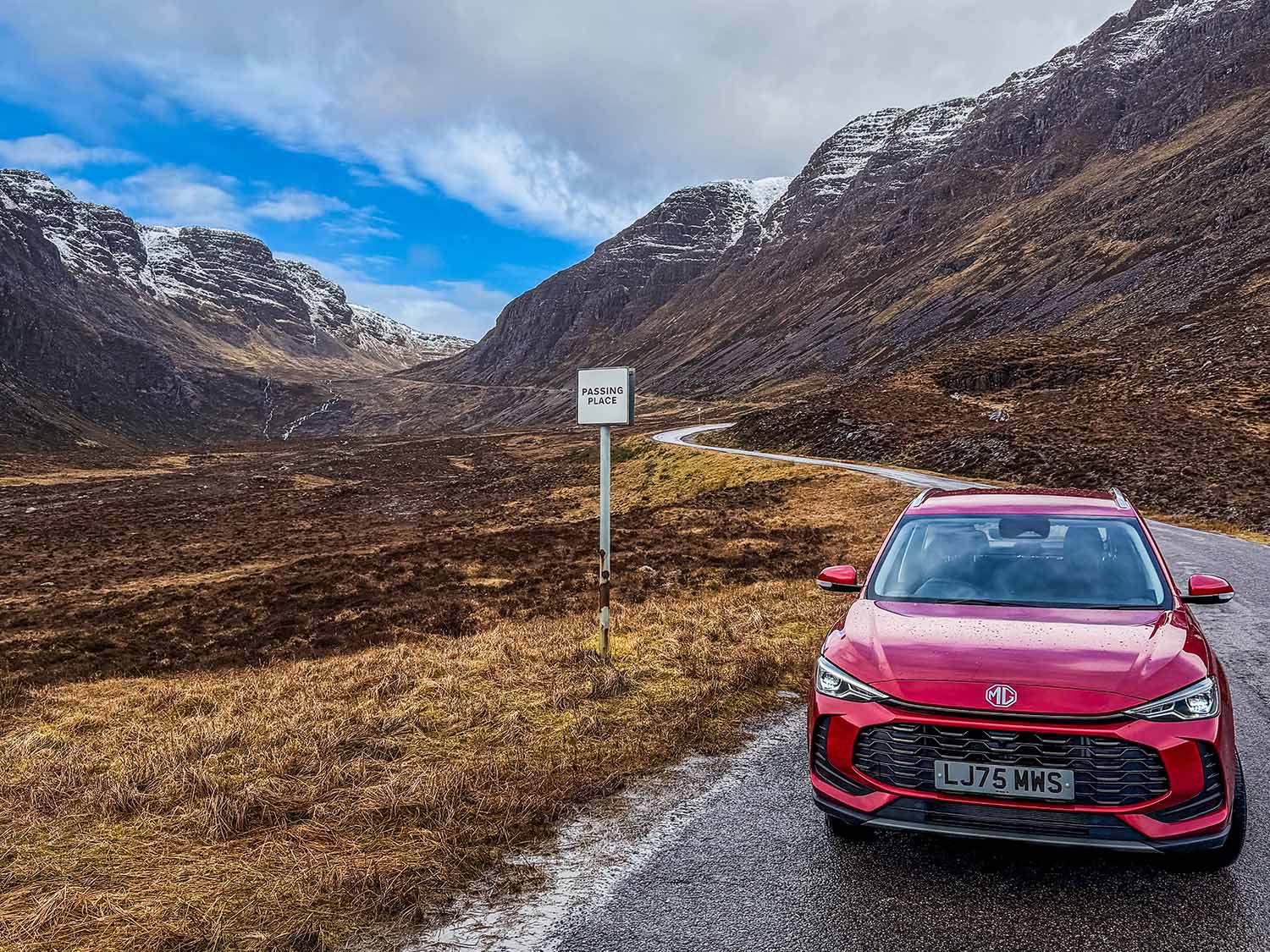
The bottom of the Applecross Pass.
The Route
The NC500 gets marketed as Scotland's equivalent of Route 66. While this provides some compelling marketing, the similarities between the two seem pretty limited.
The route is a roughly 500-mile loop around the northern tip of Scotland, starting and ending in Inverness. You can drive it clockwise or counterclockwise. I went counterclockwise, heading up the east coast first, across the top, and back down the west side, which I'd recommend. It builds in intensity as you go, and you'd rather face the most demanding roads after you've had a day or two to acclimate.
The east coast leg runs north from Inverness through Dornoch, up past Wick, and out to John O'Groats at the northeastern tip. This stretch follows "A roads" for most of the way. Two lanes. Manageable. The coastline is elevated and dramatic, and I'd compare it favorably to California's Pacific Coast Highway.
From there, the route turns west along the very top of the country, passing through Thurso and on to Tongue and Durness at the northwestern tip. This is where the road begins to narrow and the landscape starts to feel genuinely remote. Between Tongue and Durness, you cross a long causeway and then miles of open, rocky heather that feels almost lunar.
The west coast leg heads south from Durness through Ullapool and down toward Applecross. This is the most demanding stretch. The "A roads" give way to "B roads," the terrain becomes mountainous, and the route dips out onto various coastal peninsulas that add mileage and challenge. It's also where the NC500 is at its most spectacular.
From there, you can cut back east to Inverness, or do what I did and continue south to the Isle of Skye before looping back. More on that later.
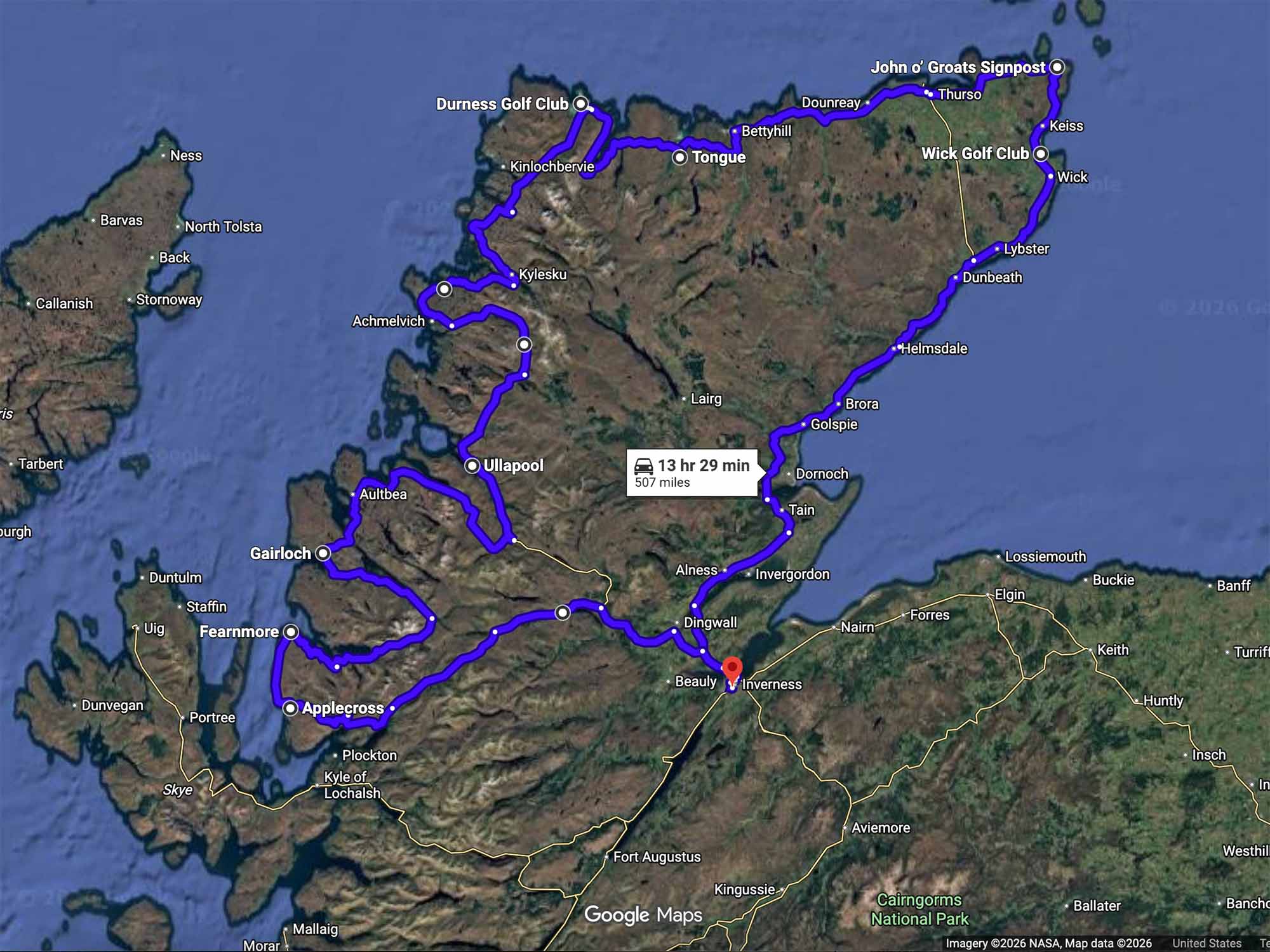
The NC500 route. My version added the Isle of Skye at the end.
The Severity of the Drive
I want to be direct about this, because I think most people underestimate it. I certainly did.
The first thing you need to understand is that this is far more of a mountain drive than a coastal one. Yes, there are beautiful stretches along the coast, but for the majority of the route, you're climbing through gorges, crossing over passes, and winding through terrain that feels less like Great Britain and more like the surface of another planet. The mountains up here are jagged, rocky peaks that look like they've been shot up from a volcano. I was not prepared for the drama of it.
I'd estimate that roughly 200 miles of the drive is on single-lane, unmarked road with passing places scattered about. The terrain shifts from coastal cliffs to open moorland to icy mountain passes, sometimes within the span of an hour. And in the course of about 15 minutes, I experienced hail, snow, blazing sunshine, and then a total downpour. That's the North Coast in a nutshell.
The roads demand your full attention. There are no podcasts, no audiobooks, no casual phone conversations on this drive. The blind curves, the potholes, the sheep standing in the middle of the road with absolutely no sense of urgency. All of it requires every ounce of your concentration. One thought that ran through my head for most of the trip: if I pop a tire out here – or worse – I am really up the creek. Thankfully, that never came to pass.
In some stretches, you will not see another car for miles. Then a local will appear in your rearview mirror out of nowhere, and you'll realize that they are far more comfortable on these roads than you are. Pull over. Let them pass. This is their turf.
I've driven all over Northwest Ireland, and in my head going into this, I figured it couldn't be much worse than that. It was worse. In the very best way possible, but meaningfully worse. If you've tackled Ireland's Wild Atlantic Way, you'll survive the NC500. But don't assume it's the same level of difficulty. It is a step up.
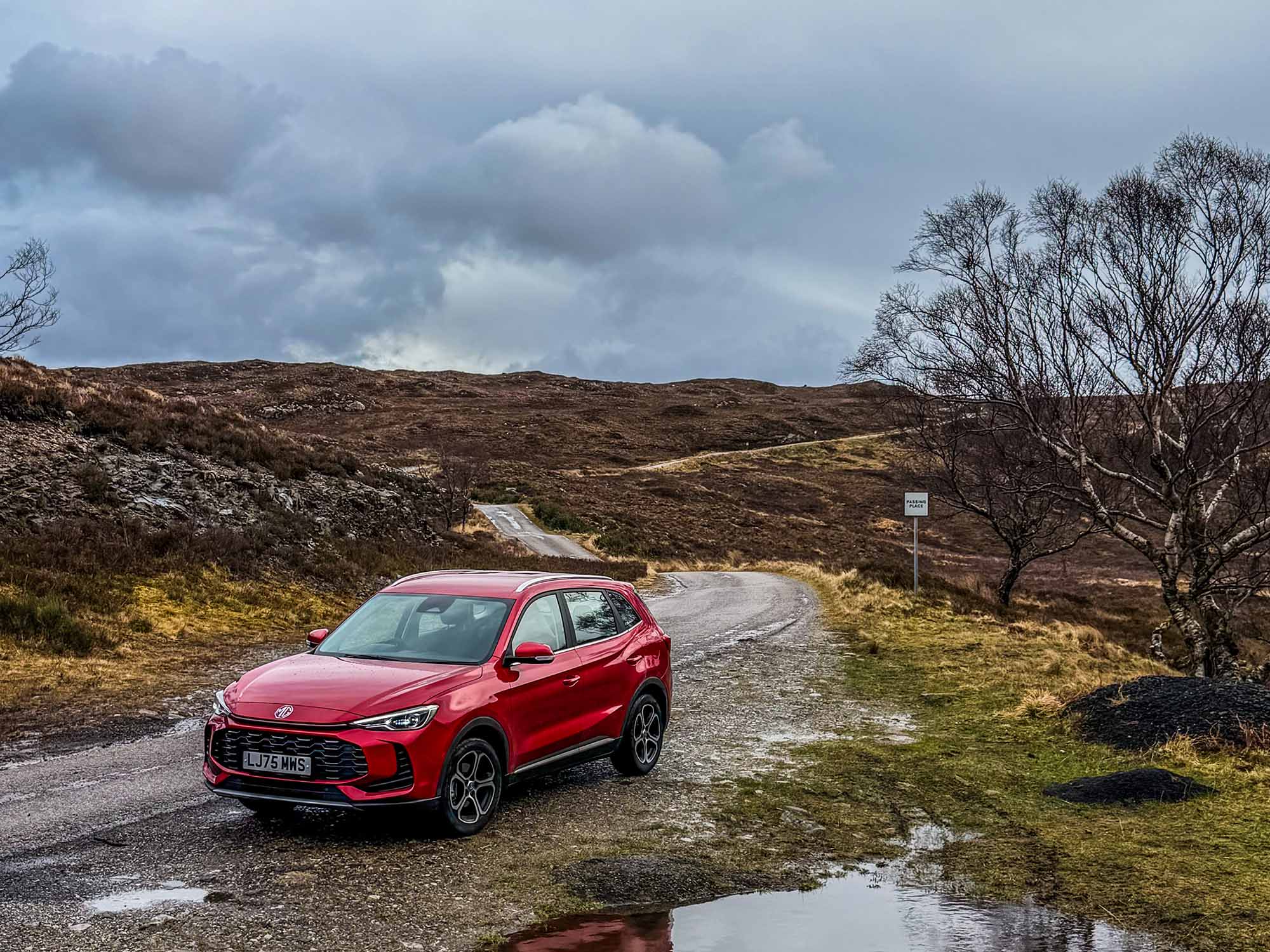
Pretty normal scene for roughly four days.
The Drive: Day by Day
I started from Royal Dornoch, where I played 18 holes and visited the new clubhouse before heading north.
Quick sidebar on the clubhouse: it is spectacular. Yes, it's huge, but it's tastefully done, with thoughtful nods to the club's history throughout. Dornoch is the anchor of every Highlands golf trip, and between the new clubhouse and an abundance of staff, the club is clearly a well-oiled machine.
From there, I pointed Marjorie north and the adventure truly began.
The Northeast Coast
The first day's drive, from Dornoch up through Wick and on to the town of Tongue, eases you in.
I stopped at John O'Groats, where a little village has popped up around the famous signpost with shops and cafes. But even on this first day, Scotland starts showing its hand.
The road climbs high above the sea. Passing cars are outnumbered by sheep and alpacas. Tiny towns pass in a blink. As you approach one, a sign announces it as the birthplace of author Neil Gunn, with the clear assumption that you should already know who that is.
I stopped at the Tongue Hotel for the night, which is owned by the same company that runs the Royal Golf Hotel next to the first tee at Royal Dornoch. And it was here that I had what might be the best fish and chips of my life. More on that later.
Tongue to Durness to Ullapool
This is where the NC500 gets real.
I left Tongue at dawn and was the only car on the road. That didn't change much for the rest of the day. In the course of roughly 150 miles of driving, I'd estimate I passed maybe 10 cars. Total.
West of Tongue, the road narrows to a single lane and the landscape opens up into something almost extraterrestrial. Miles and miles of open heather, vast and lunar. There were few towns. And what constituted a "town" on most of this stretch was just a handful of houses. Occasionally, I'd spot a random line of telephone poles disappearing over a hill and wonder where they were leading.
The snow was what I hadn't bargained for. There was a lot of it, and one of the 10 vehicles I passed all day was a salt truck. I suppose this shouldn't have come as a surprise in early March. But it was an unexpected layer of stress for a lifelong Floridian driving mountain roads.
I played Durness Golf Club that morning (more on that in the golf section below), then continued south toward Ullapool.
It was along this stretch that I noticed something I'll never forget: no matter how tiny the village, there is always a World War I memorial. Always.
I ended up in Ullapool for the night, a little coastal town with a ferry to Stornoway. It had a Tesco, which at that point in the trip felt like finding civilization. I checked in at the pub, watched the ferry come and go, and recharged.
I was going to need it.
The Applecross Pass
This section deserves its own telling, because I had absolutely no idea it was coming.
The next day was spent almost entirely on "B roads." Which is to say, it was remote, gorgeous, and exhausting.
Eventually, I came upon the Bealach na Bà, the Applecross Pass. It is a single-track road that climbs – at least on this day – through snow and ice to the summit of a mountain pass.
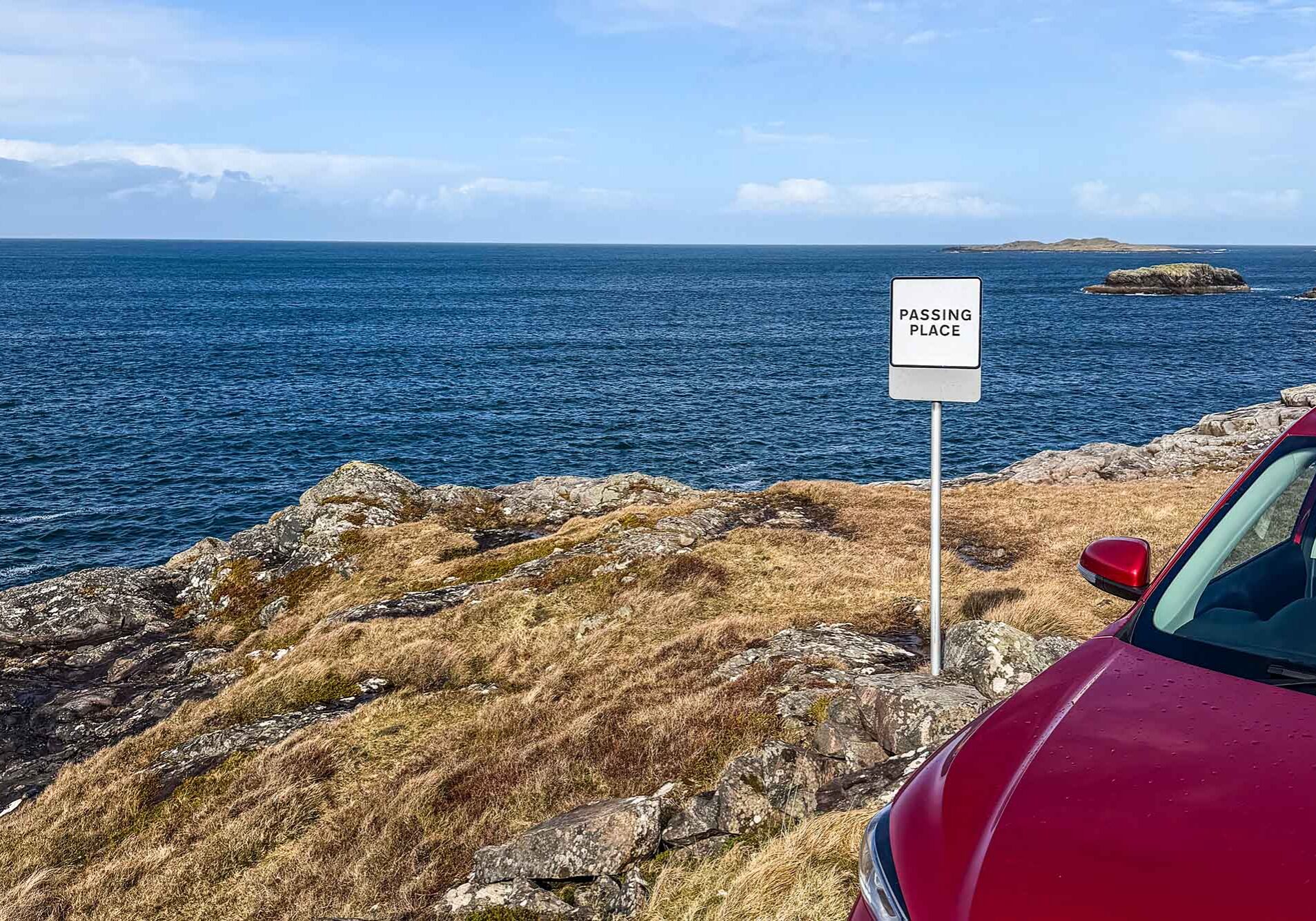
I was climbing, climbing, climbing, and it started chucking down hail. I hadn't crested the hill yet, so I had no idea what was on the other side. I pulled into a passing place near the very peak, alone, the car shaking in the wind, not another human being for probably 20 miles.
The hail passed. I crested the hill. And what I saw on the other side was the most absurd driving scene of my life.
It looked like Lombard Street going down a mountain. Switchback after switchback after switchback, single lane the whole way, then a single-lane descent along the edge of a gorge for what felt like two miles. I could see all the way to the bottom.
And it was, without question, the most thrilling thing I've ever done in a car.
It wasn't until that evening that I discovered all of the videos and articles calling the Applecross Pass "Britain's most dangerous road."

The top of the Applecross Pass before descending. I did not know this was coming.
Detour to the Isle of Skye
The Isle of Skye is not technically part of the NC500. But it's a natural extension of the journey, and if you've come this far north, you'd be doing yourself a disservice not to make the detour.
Here's what you should know:
Skye has become an "it" destination on Instagram. Parts of the island, particularly around the more famous sites and viewpoints, feel noticeably more touristy than anything you'll experience on the North Coast. Other parts feel just as remote and wild as the most isolated stretches of the 500. It's a mix, and the further you push onto the island, the more it reveals itself.
The driving on Skye was actually the easiest of the entire trip, though still single track in places. The road out to Neist Point was a little treacherous, and I got pelted with hail once again just as I arrived at the point. Scotland.
One thing I'd stress: Skye is not a day trip. I know some people try to do it that way, and I'd strongly advise against it. It's a couple of hours from Inverness just to reach the island, and then you need a solid 30 minutes to an hour before Skye really becomes Skye. You've got to push deeper onto the island before the landscape ramps up into what you're really there to see. Give it at least an overnight, if not two.
My final stop on Skye was The Three Chimneys, and it was the perfect way to end the journey.
I had waited 20 years to eat there, and it was worth every one of them. The setting is extraordinary. The meal was among the finest I've had anywhere. They had a cod dish that was essentially deconstructed, elevated fish and chips: beautifully prepared cod, tiny pieces of chip in the sauce, and a warmed tartar sauce that was out of this world. The bread service alone was memorable. This little bun, pulled apart into four pieces, clearly designed for two. I ate every bite myself.
But what I remember most is the warmth. After days of hailstorms, icy passes, and white-knuckle driving, walking into that kind of hospitality felt like exactly the right ending. The rooms are equally impressive, intimate and beautifully appointed. The breakfast the following morning was possibly just as memorable as dinner. They only have about six guest rooms, so book well in advance.
On the way back to Edinburgh the next morning, I made one last tourist stop: Eilean Donan Castle, probably the most photographed castle in Scotland outside of Edinburgh Castle. It sits on a small peninsula in the middle of a loch, and it's every bit as stunning as the pictures suggest. I snapped a photo, got back in the car, and kept going.
That final drive back to Edinburgh was a long one. Beautiful, but long. In hindsight, breaking it up with an overnight stop would have been the move.

Worth every minute of the detour.
The Food
I want to give the food its own space, because it surprised me.
At the Tongue Hotel, I had what might be the best fish and chips I've ever eaten. And look, my experience with fish and chips is pretty vast. I have been ride or die for Tailend in St. Andrews as the best in Scotland for years. They have been demoted one notch.
The fish at Tongue was lightly breaded, the chips were perfect, and when I mentioned it to the server, his explanation was simple: a man named Billy brings the fish in at Scrabster, and it arrived that morning. That's the whole story. And it says it all.
Also at the Tongue Hotel: the sticky toffee pudding. Top five of my life, easily.
In Durness, I found a chicken tikka pastry at the tiny village Spar shop that had absolutely no right being as good as it was. I ate it in about three bites and immediately regretted not going back for the last one.
And then, of course, The Three Chimneys. Already covered above, but worth repeating: the meal alone is worth the journey to Skye.
But the key thing to know about food on the NC500: there isn't a ton of it.
With it being off season, most of the cafes and such were still closed. Still, if you're expecting to regularly pass a town with a pub and a mini Sainsbury's, think again.
Food options are particularly scarce on the stretch from Thurso to Ullapool. I hit Tesco in both towns and loaded up on snacks and to-go sandwiches.

The fish and chips at the Tongue Hotel.
The Golf
Let me be clear about something upfront.
The North Coast 500 is not a golf trip.
It's an adventure that happens to pass within striking distance of some truly wonderful courses, and if you're smart about your routing, you can squeeze in a round or two that you'll talk about for years.
And while, Royal Dornoch, Fortrose & Rosemarkie, Tain, Golspie, and Brora are all technically on the NC500, I'm going to focus on the courses that aren't part of the normal golf tourism path.
In short, don't be afraid to pack the clubs.
And if you do want to learn more about the courses above, check out The Highlands of Scotland Off the Beaten Path.
Wick Golf Club
The best way I can describe Wick Golf Club is that it's what Brora was 15 years ago, before Brora became Brora. Before the social media attention, before it became the course everybody's chasing.
Wick is like stepping back in time to the kind of links golf that makes you remember why you fell in love with the game. Classic out-and-back routing and no pretension. Just honest golf.
The front nine plays on the inland side of the links, with sheep and farmland stretching along the left side. Then the back nine plays in alongside some towering dunes, and the whole thing changes character.
The eighth is a really strong par five. The ninth is a par three with a river running along the left, a green backdropped by the dunes, and a World War II bunker still sitting nearby. The thirteenth and fourteenth have some of the best green complexes on the course. And the seventeenth is tremendous fun, played from an unreal tee set atop a giant dune.
I was done in three hours, got back in the car, and drove up to John O'Groats with a smile on my face.
Durness Golf Club
Let me tell you about Alistair Morrison.
Alistair is the only person on the payroll at Durness Golf Club. As far as I can tell, he's the course manager, the greenkeeper, the reservationist, and whatever else they need him to be on any given day. He's a local, born and raised, and he's the passion and the driving force behind the place. He met me at the clubhouse, and I immediately understood why Durness is special.
Let me also be totally candid: the weather at Durness was dreadful. I knew from Instagram that it wasn't always the case.
I hit my tee shot on the 1st just as a passing hailstorm let loose. I waited it out in the clubhouse, and when the hail stopped I decided it was now or never.
The first few holes climb steeply uphill. If you're familiar with the opening climb at Gullane #1, let me assure you that Durness has it beat. When I reached the 2nd green, another squall was clearly on the way.
I decided to cut over to the 8th and play in, but it was no good. I was caught in a hailstorm so sudden and so violent that I ducked down underneath my trolley and let it take the brunt of the hail.
My hands were frozen. I slipped and fell on the fairway. The wind was sideways. I briefly questioned every life decision that had led me to this specific patch of grass on the northern edge of Scotland.
And then the sun came out.
That's Durness. That's Scotland. Four holes or forty, it was worth every minute of the journey to get there.
Reay Golf Club: The One That Got Away
I didn't play Reay Golf Club, and I regret it. Time simply didn't allow for it.
It sits just west of Thurso and has a reputation among those who know as one of the most enjoyable and underappreciated links in the far north.
If you're planning your own NC500 and you have to choose between a round at Reay or an earlier arrival to your next stop, play the golf.
The road will still be there tomorrow. Probably with the same sheep on it.
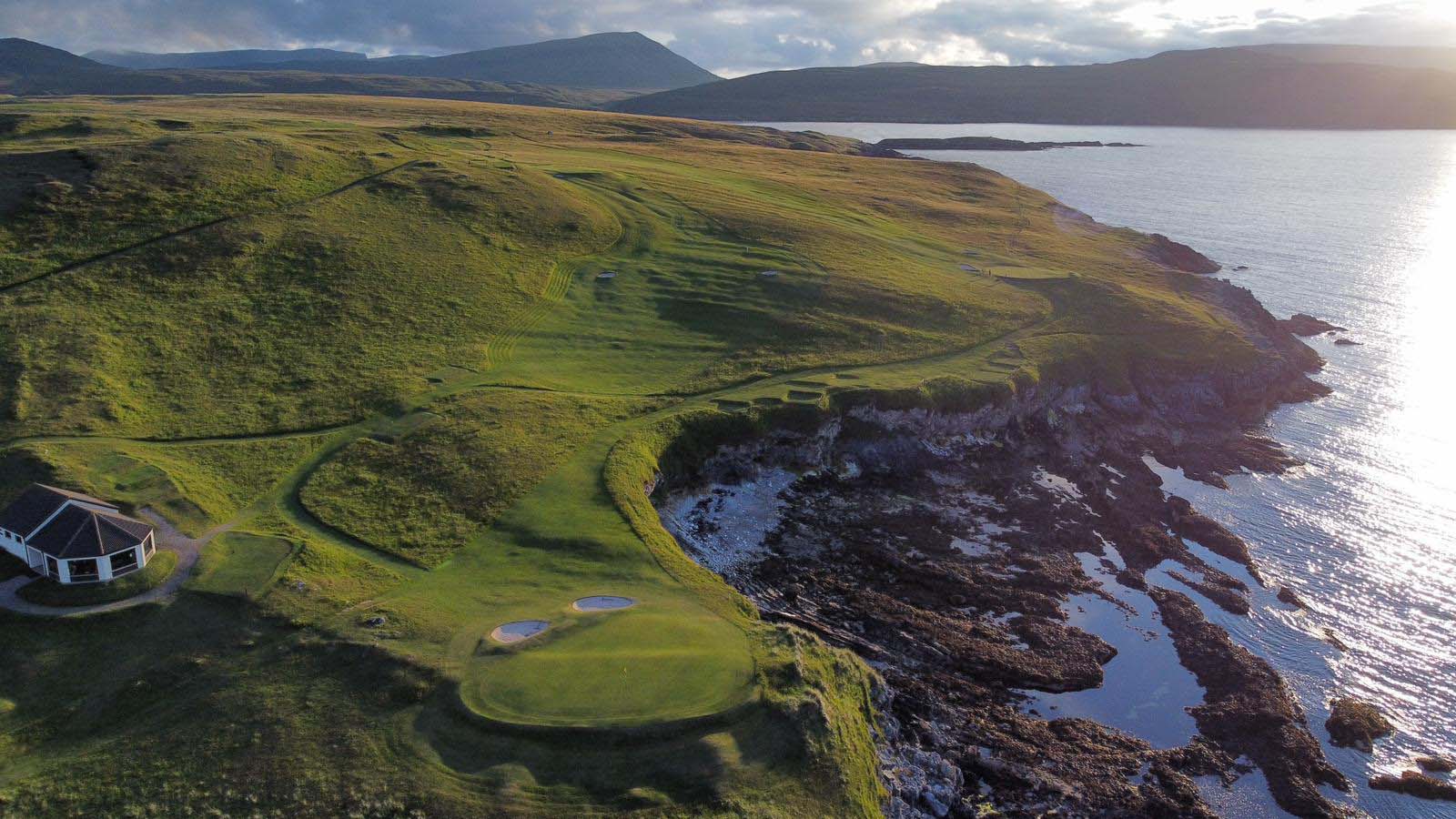
Durness at its finest. Thanks to Alister Morrison for the hospitality and photo.
What I'd Do Differently (Learn from My Mistakes)
My biggest piece of advice is simple: don't be like me. Do your research.
I came into this thing with almost no preparation, and while the surprises made for great stories, knowing what to expect on the road would have reduced a lot of unnecessary stress.
Beyond that, here's what I'd change.
Add More Time
Including my time in Dornoch, I did the NC500 portion of my trip in about five days. I wished I'd had a full week.
More time gives you breathing room to stop more often, play an extra round, or simply sit somewhere and take it all in without feeling like you're racing the clock. The NC500 rewards patience.
Don't Go in Peak Summer
I cannot imagine doing this drive in the height of summer with camper vans, motor homes, and tourist traffic at every passing place. At some points, the passing places are no more than 100 yards apart. Inching along in that terrain sounds like a nightmare.
In contrast, I went in early March and had the roads almost entirely to myself. The extreme solitude was one of the best parts of the experience.
Get the Right Car
You need something with some heft and some power, but not too big. I had an MG SUV and it was perfect. You want something that can handle the terrain and give you a sense of security on the mountain roads. But yet nimble enough to not feel like driving a semi-truck on the single lane roads.
When You See Gas, Fill Up
Stations are not as frequent as you'd like them to be.
Get Out and Explore
This is related to the "more time" tip above. Along the drive there are countless opportunities to explore. A mountain hike. A climb down to a secluded beach. Yes, the drive itself is amazing, but I wish I'd been able to explore more on foot.
Treat Skye As Its Own Trip
If you're going to Skye, give it at least an overnight. It is not a day trip. The island needs time to unfold, and trying to rush it means missing the best of it.
Break Up the Drive from Skye
My final day was a long haul from Skye back to Edinburgh. The scenery was incredible, but the length of it was felt. If I had it to do over, I'd find a way to split that drive with an overnight stop.

The last official stop: Eilean Donan Castle.
H&B and the North Coast 500
So you might be wondering: can H&B plan an NC500 trip for me?
The candid answer is no.
The NC500 is a beautiful, wild, unpredictable adventure. And that last part is exactly why it falls outside what we do. Haversham & Baker Expeditions are built on a promise: that every detail is accounted for, every variable anticipated, every experience delivered to a standard our Members have come to expect.
The NC500, by its very nature, resists that kind of control. The roads are unpredictable. In places, they're borderline dangerous. The accommodations along the route, while charming, are not the caliber we hold for our Expeditions. There are simply too many variables that can't be managed to the level our Members deserve.
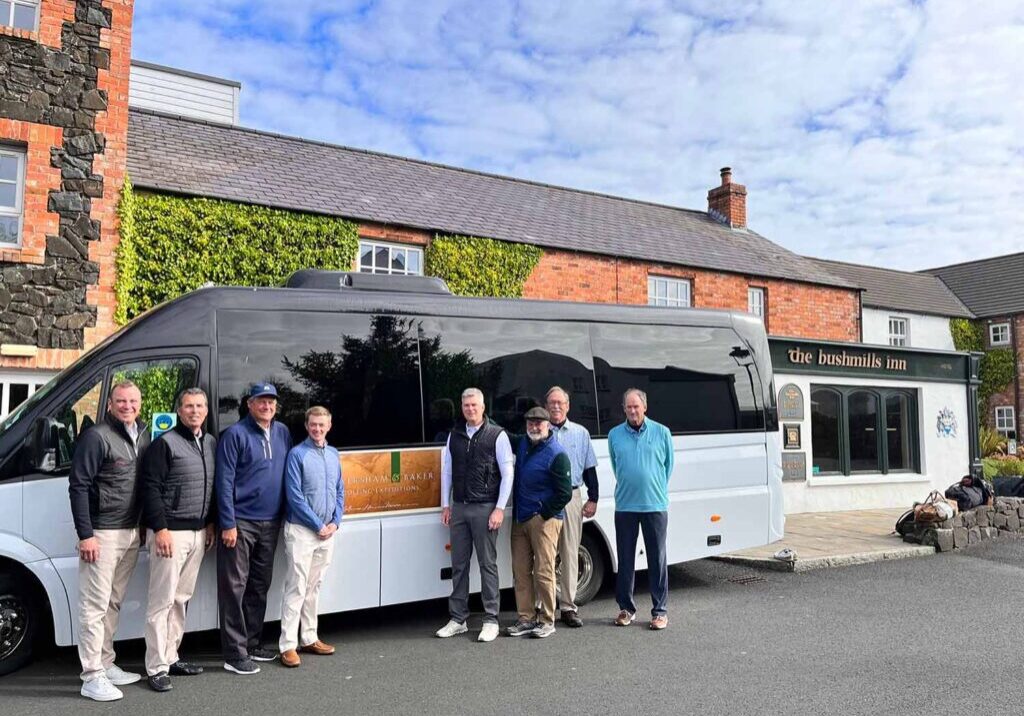
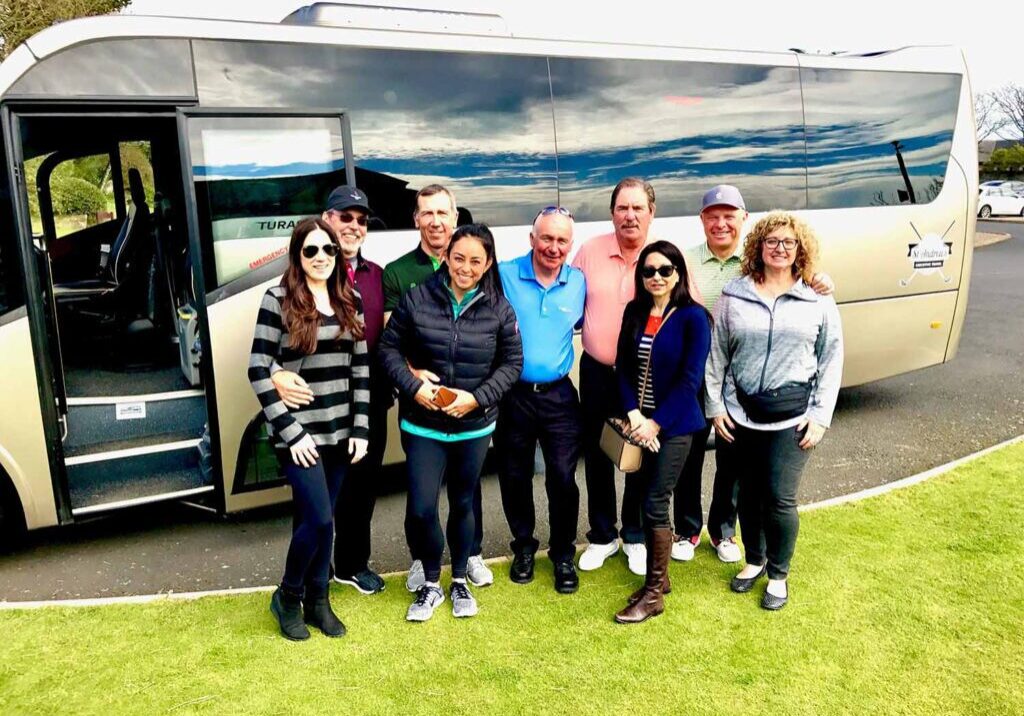
And quite frankly, you can't do most of this route in the coaches and sprinter vans that are part of our hosted experience. You've got to be on your own in a self-drive vehicle, in a small group. A couple, or maybe two friends who are up for the adventure. That's a different kind of trip than what we build.
What I can tell you is this: if you're the kind of traveler who's drawn to the NC500, you're exactly the kind of person we love working with. You've got curiosity, a sense of adventure, and an appreciation for Scotland that goes deeper than the marquee courses.
The NC500 is the adventure you give yourself. An H&B Expedition is the experience we build for you. There's room in a well-traveled life for both.
In the meantime, if you're an H&B Member who's thinking about tackling the NC500 and you want to talk through routing, golf options, or what to expect, I'm the person on our team who's driven every mile of it.
I'm happy to help.

Download Your Complete Guide to The Home of Golf
The Complete Guide to
Scotland Golf Travel
What's covered in this free 40+ page guide:
- The best regions for golf in Scotland.
- Old Course at St. Andrews tee times.
- Where to enjoy the Good Life between rounds.
- Lesser known courses you should play.
Plus links to over 50 additional guides and resources.
By downloading up you agree to receive marketing communications from Haversham & Baker and have read our privacy policy.
Ready to Experience Golf and the Good Life in Scotland?
Additional Reading



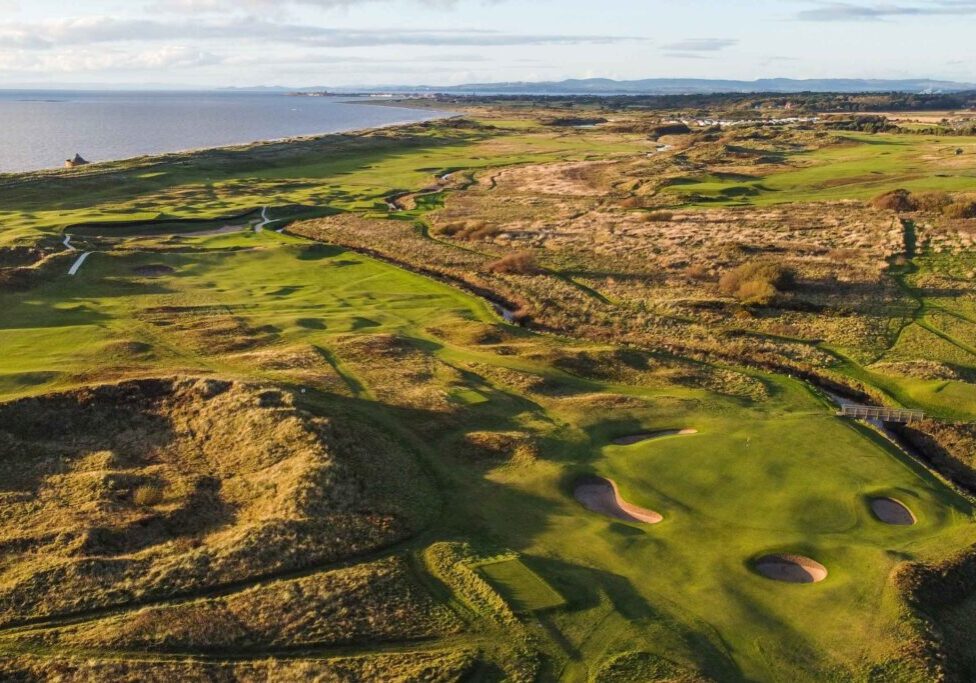




























Visit the Yardage Book for More Golf Travel Resources
Discover More of Golf at its Finest with H&B